头脑风暴
书名:满城尽带黄金甲|作者:笑无语|本书类别:古言|更新时间:22:44:59|字数:3896字
一 |
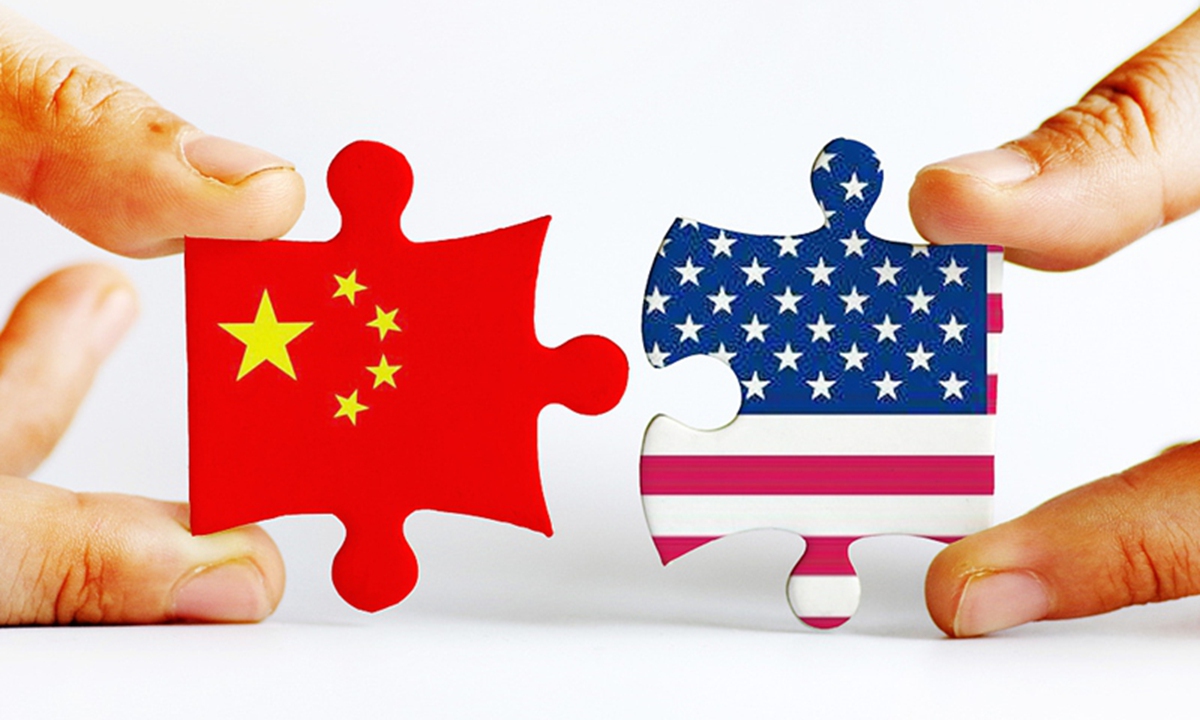
The proposed Office of Management and Budget (OMB) rule, set to take effect in December, would mark one of the biggest overhauls of US science funding in decades, giving political appointees greater authority over grant awards previously guided by scientific peer review and requiring that they "advance the President's policy priorities," according to the Washington Post.
It would also effectively expand the 2011 Wolf Amendment, which bars scientists from using NASA funding for bilateral collaborations with China, to all federal agencies and scientists receiving federal funds, marking the largest break in US-China scientific engagement in decades, the US media outlet reported.
So far, the proposed rule has garnered nearly half a million public comments, many from scientists and leading US science bodies. A Washington Post analysis of 50,000 of those comments found that around 88 percent were negative.
The rule, initially set to take effect in October, was pushed back to December after a bipartisan stopgap funding bill temporarily halted its adoption. Unlike the Wolf Amendment, the rule does not require congressional approval to take effect.
"I do think there are still members of Congress who think we have a monopoly on knowledge. They think we're still in the Cold War Soviet era ... where we were ahead in most areas of science and technology. That is not the case with China. We are no longer the leader in many areas of science," said Tobin Smith, senior vice president for government relations and public policy at the Association for American Universities, which advocates on behalf of leading US research universities, per the Washington Post.
Scientists warn that the rule risks subjecting long-term scientific research to four-year political cycles. "We will not succeed if with every new administration we are ping-ponging back and forth about priorities," the American Association for the Advancement of Science said in a blistering comment, urging the administration to withdraw the rule. "Fast-tracking such profound changes ... hands an easy victory to nations like China," it said, the Washington Post reported.
This reflects a fundamental divide between the US government and the scientific community over how science should develop, Wang Yiwei, a professor at Renmin University of China's School of International Studies, told the Global Times. He noted that politicians tend to believe that suppressing China as a competitor would allow the US to preserve its market dominance and technological edge.
Scientists, however, tend to follow a different logic, as scientific progress depends on openness, exchanges and collaboration. If science and technology are driven solely by competition and private capital, with the ultimate goal of maintaining technological monopolies, this could create greater risks and ultimately undermine US interests as well, Wang said.
The proposed rule change is the latest salvo in a broader battle in Washington over how to respond to China's rise as a scientific superpower. In July, the US National Science Foundation (NSF) also moved to ban collaborations between scientist it funds and many Chinese research institutions and their employees, according to Science magazine.
Liu Shaoshan, director of the Center for Embodied AI at the Shenzhen Institute of Artificial Intelligence and Robotics for Society and a former US-based researcher, told the Global Times in a previous interview that the NSF's new proposed rules created a "talent wall," arguing that restrictions based on nationality, institutional affiliation, and research partnerships could reduce the global talent pool available to the US, weaken its ability to attract leading scientists, and slow scientific innovation.
Liu also said scientific advancement relies not only on discovery but also on the exchange, validation, and dissemination of knowledge.
Wang also said China has built significant strengths through its vast pool of scientists and engineers, complete industrial chains and massive application scenarios, while increasingly moving from application-oriented innovation toward original research. Against this backdrop, US technological blockades and restrictions on cooperation are unlikely to halt China's progress, but could instead isolate American scientists from China's latest research and collaboration opportunities. Such an approach could also prevent the two countries from leveraging their respective strengths and ultimately undermine US competitiveness, Wang said.
。
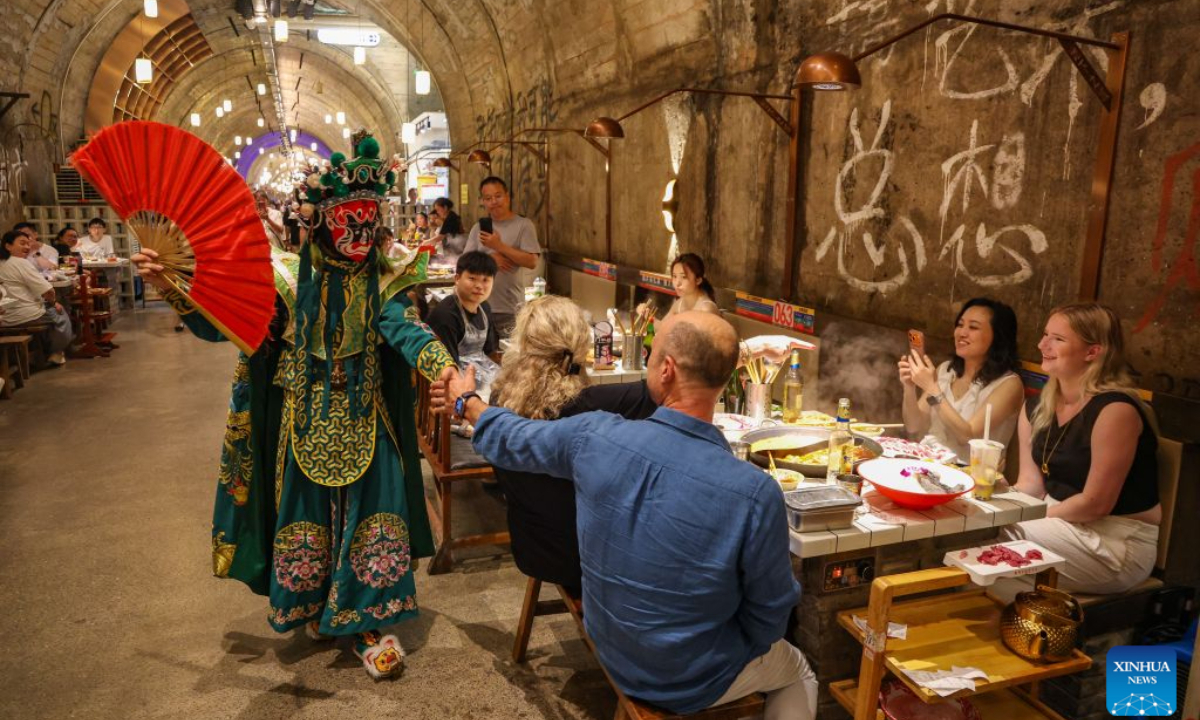
The answer to his comfort lies in the restaurant's unlikely location. This hotpot restaurant, named Underground City, is hidden inside a former air-raid shelter, one of the city's distinctive spaces offering natural coolness.
"It's amazing that the restaurant stays so cool even in scorching summer heat," Rostand said. "Chongqing has given me the chance to experience something I can't find in Australia."
Chongqing has long been dubbed one of China's "furnace cities" for its sweltering, humid summers. In July alone, the city endured 26 consecutive days of high heat, with temperatures breaching 40 degrees Celsius for a full week and topping out at a scorching 41.6 degrees.
The blazing heat, however, has failed to dampen the enthusiasm of global travelers. According to the Chongqing General Station of Exit and Entry Frontier Inspection, more than 610,000 inbound and outbound trips by foreign nationals were recorded at Chongqing Jiangbei International Airport in the first half of the year, marking an 86-percent surge year on year. The top five source countries were Thailand, Malaysia, Singapore, Vietnam and Indonesia.
European travelers proved to be a standout growth driver. Data from Trip.com shows that as of July 21, inbound travel bookings from Europe to Chongqing for this summer season climbed by over 40 percent year on year, while scenic spot ticket orders surged by 214.7 percent and activity-based bookings rocketed by a staggering 6,900 percent.
Thanks to China's visa-free policies and other travel facilitation measures, Chongqing is rapidly gaining traction as a go-to "coolcation" hotspot for international visitors. Creative cool-off spaces, diverse travel experiences and comprehensive summer services have all contributed to its rising appeal.
UNDERGROUND COOL
Chongqing's summer cooling secrets were first found underground. Since the late 1930s, the city has carved thousands of air-raid shelters into its mountainous terrain.
Once serving as sanctuaries for civilians during the Chinese People's War of Resistance against Japanese Aggression, these spaces have now been repurposed as hotpot restaurants, tea houses and venues for Sichuan Opera performances, providing both refreshing coolness and preserving the city's living memories.
"The temperature inside the shelters remains around 25 degrees Celsius all year round, making them natural cool retreats," explained Wang Jing, marketing director of Underground City.
"We serve more than 300 tables a day on weekends," she added. "Right now, about one in every six diners is from overseas. And we're seeing more and more visitors from Southeast Asia and Europe."
Annika, a tourist from Germany, revealed that the restaurant has gone viral on overseas social media platforms. "We were attracted not only by this unique way of escaping the summer heat, but also by the opportunity to dine in a place filled with history and culture," she said.
CHASING CHILL
On August 1, Chongqing issued an orange heat alert. At a water park in its Fuling District, 10 tonnes of industrial ice were dumped directly into the wave pool. Half-submerged in the refreshing water, visitors could splash around or even play mahjong at custom-made tables in the pool.
This unique summer cooling scene has attracted coverage from mainstream media in countries including Russia and Canada, with overseas outlets reportedly dubbing it the most intriguing summer spectacle in China this year.
At Chongqing Xingrui international travel service, inquiries from cross-border travelers hailing from hot and humid regions such as Vietnam, Laos and Indonesia have risen notably in recent weeks.
Peng Hengcong, head of the travel agency, said they have rolled out themed tour products, including "cool retreats in the mountains" and "gorge rapids adventures," tailored to overseas visitors seeking summer cooling experiences. These products cover areas with higher altitudes or rich water systems in Chongqing, with the highlight being a "23°C summer" experience.
Luo Zibai, an expert with the China Tourism Academy, believes that Chongqing's sustained popularity among travelers lies in its ability to fully leverage its distinctive strengths and develop differentiated tourism products that offer a broad spectrum of experiences.
URBAN REFUGE
Chongqing is weaving a citywide "cooling network" -- ranging from shopping malls to public facilities, and from indoor spaces to outdoor areas.
At a shopping mall called The Ring in the city, visitors are greeted not by endless rows of shops, but by a lush indoor rainforest. With misting systems and carefully designed lighting, the mall keeps the temperature at about 21 degrees Celsius, creating a cool, dreamy summer escape.
"I like Chongqing a lot because it has its own character," said Bilal Badri, who was visiting from the Netherlands. "The way nature and the city's landscape blend together here is just perfect."
The cool experience extends beyond the mall. In the Mountain City Alley historic district, a 400-meter-long pedestrian walkway has been transformed into a "cooling corridor," where misting systems and shaded areas reduce the perceived temperature by 3 to 5 degrees Celsius.
In addition, since July 8, Chongqing's rail transit system has set up cooling zones in 158 metro stations, offering free air-conditioned spaces and heat-relief supplies to residents and tourists alike.
"Chongqing's creative and thoughtful ways to help people beat the summer heat are impressive. It's really interesting to discover these unique experiences," said Alexandra, a Romanian tourist. "This time I didn't stay long enough to explore more of the city, and I'm planning to come back in the near future."
。


